Filling & capping
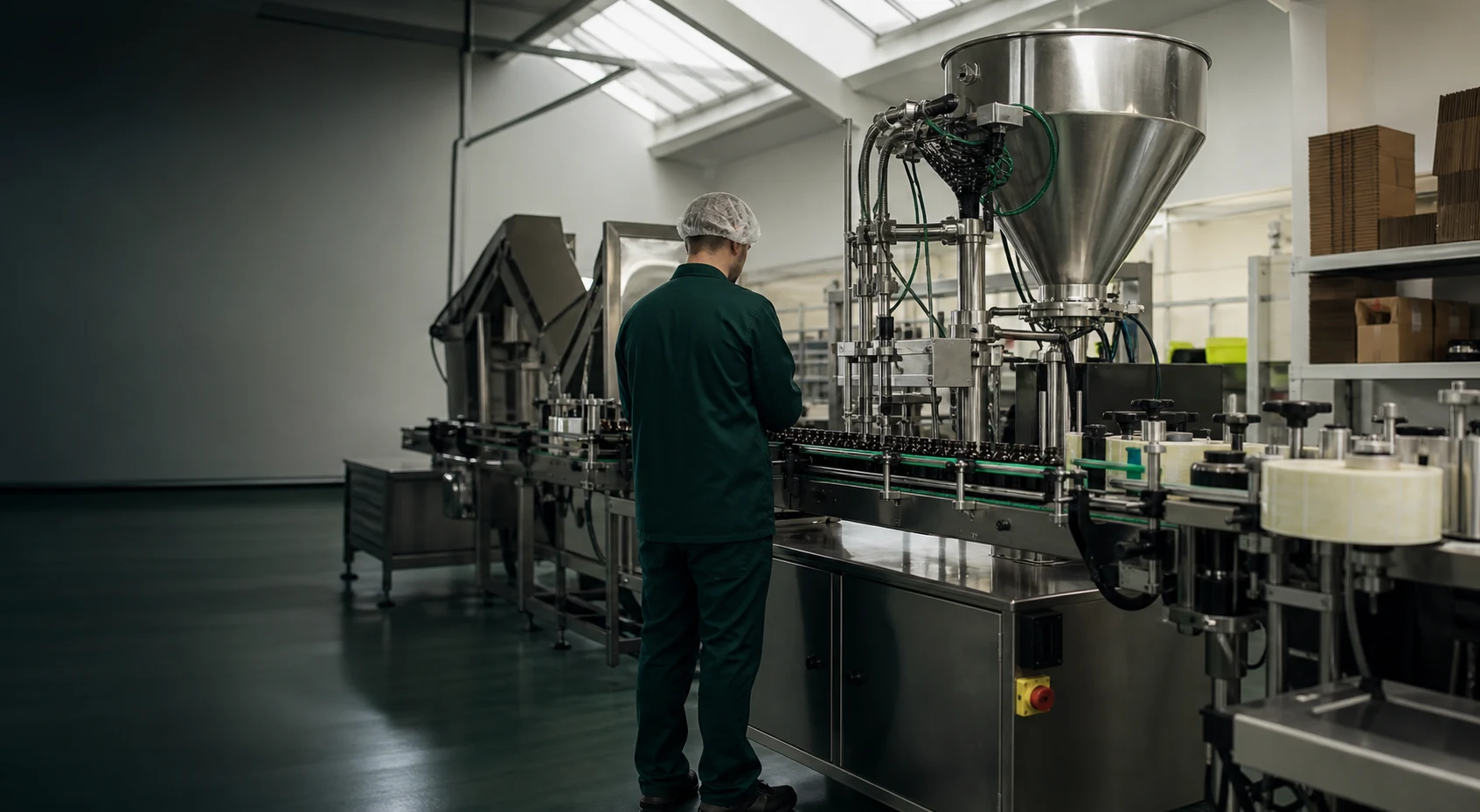
A practical route for compatible liquids, creams, powders and granules, with the closure applied and checked as part of the run.
Service detailsUK SMALL-BATCH CONTRACT PACKING
Flexible co-packing for launches, pilot runs and repeat batches—without the large-volume commitment. Filling, labelling, kitting, rework and hand packing from one practical UK partner.
DIRECT ANSWER
Small-batch contract packing—also called co-packing or contract packaging—is the outsourcing of filling, labelling, assembly or finishing work for a lower-volume production run. It gives brands a professional route between packing everything themselves and committing to high-volume production.
Stockholm Ltd focuses on the practical detail: what needs packing, how the finished pack should look, the real quantity and the required timing. Start-ups, growing brands and established manufacturers can use one service or combine several into a complete route.
Tell us what you needWHAT WE CAN DO
Choose one stage or bring several together into a complete packing route.
A practical route for compatible liquids, creams, powders and granules, with the closure applied and checked as part of the run.
Service detailsConsistent label application and batch-detail handling, planned around your pack, artwork and presentation requirements.
Service detailsBring multiple components together into a sale-ready kit, sample pack, subscription box or promotional bundle.
Service detailsReconfigure, relabel or correct stock carefully when an existing pack needs a change before it can move forward.
Service detailsDetail-led folding, sleeving, sealing, inserting and presentation work for packs that need a human touch.
Service detailsA responsive option for trials, launches, seasonal activity and repeat small batches without forcing an oversized commitment.
Service details PRODUCTION / 01
THE RIGHT ROUTE FOR YOUR RUN
Your product, packaging and quantities shape the process. We review the details before work starts, then agree the packing route and finish you need.
A STRAIGHTFORWARD PROCESS
You do not need a perfect specification to start. Give us the useful facts and we will help identify the next step.
Tell us the product, pack, quantity, finish and target date.
We look at the process, materials, handling and practical route.
Scope, presentation and supplied components are confirmed.
Your batch is completed to the agreed brief and prepared to move on.
SMALL BATCH. FULL ATTENTION.
Handled well, a smaller run should still feel consistent, considered and ready for your customer. That means paying attention to alignment, assembly, seals, presentation and transit packing—not simply getting units through a line.
Plan your next batch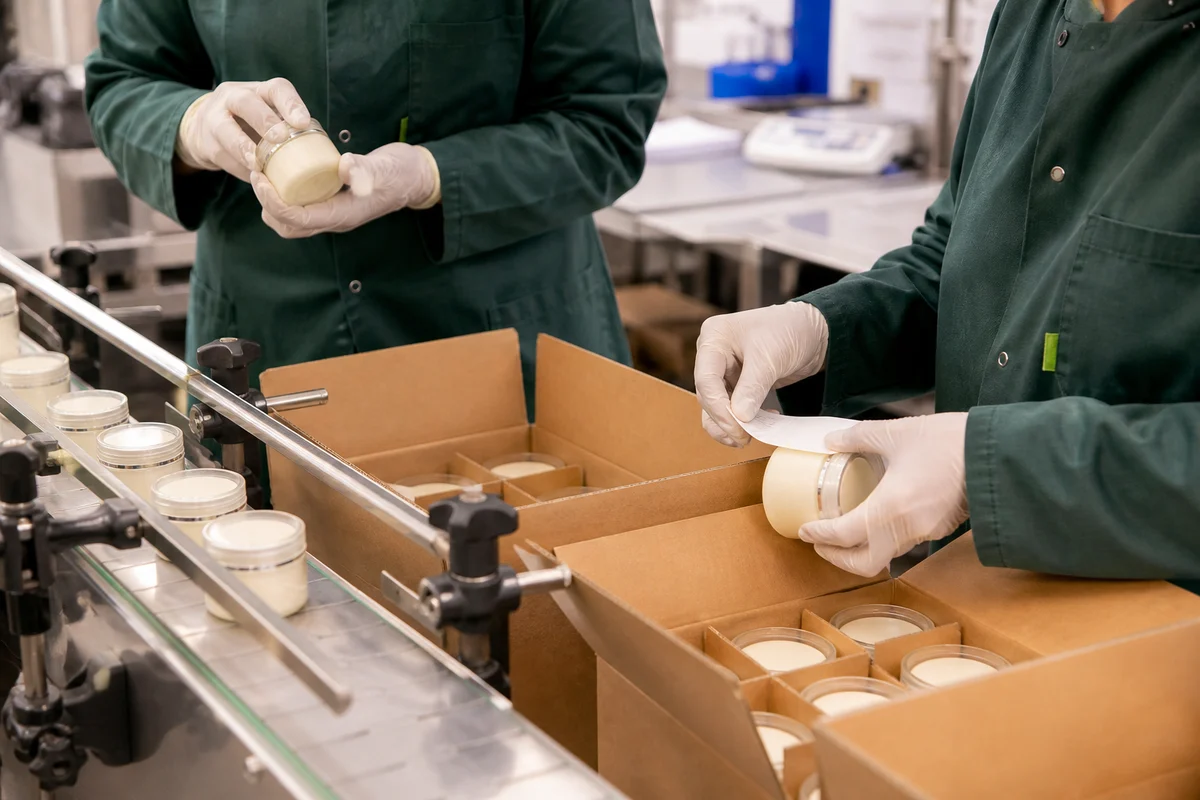
A USEFUL FIT FOR
Get a first commercial batch packed without planning for scale you do not yet need.
Test a pack format, presentation or route before committing further.
Prepare limited editions, promotions, gifting and campaign-specific packs.
Build a practical rhythm around real demand and available stock.
Correct, refresh or reconfigure stock so it can move forward.
SEARCH BY PROJECT TYPE
See how individual services can combine around a launch, presentation pack, recurring box or campaign date.
Move from samples and self-packing to a credible commercial batch without planning for demand you have not proved yet.
Explore route →02Turn separate products, inserts and presentation components into one consistent, customer-ready set.
Explore route →03Build repeatable multi-item boxes from a clear component list, variant plan and finished presentation standard.
Explore route →04Add temporary packing capacity for a defined campaign, seasonal peak or limited run without redesigning your permanent operation.
Explore route →CHOOSING A PACKING PARTNER
Share the product format, container or components, required finish and anything still undecided.
An honest approximate unit count helps identify whether a manual, semi-automatic or combined route is practical.
Launch, retail and campaign deadlines shape material readiness, production planning and the next useful step.
Artwork, photographs, samples or a clear reference help turn presentation expectations into an agreed brief.
GOOD TO KNOW
A few practical answers to help you decide what to send us.
There is no single number that suits every project. Pack format, product, process and the amount of manual work all matter. Share your approximate quantity and we will tell you whether it is a practical fit.
Yes. Launches and pilot runs are a natural fit for small-batch packing. We can review the components, proposed process, target quantity and deadline before recommending the most practical route.
Projects may include compatible liquids, creams, powders, granules, components and pre-packed goods. Suitability is always reviewed against the product, packaging, process and handling requirements before work is agreed.
Tell us what you already have and what is still needed. We can discuss the most practical route for containers, closures, labels and transit packing as part of the initial brief.
Include the product, pack format, fill size or components, approximate quantity, artwork status, required finish and preferred completion date. Photos or samples can be discussed after the first enquiry.
Yes. A clearly documented repeat run can be planned around your forecast and stock position, subject to capacity, materials and the agreed specification.
START A CONVERSATION
A useful first message includes your product, pack format, approximate quantity and preferred timing. If some details are still open, that is fine—send what you know.
For a first commercial batch, separate the essential pack from options that can wait. List the variants you genuinely need at launch and the components each one uses. Changing several labels, containers and inserts across a small quantity can add preparation and checking steps. Give Stockholm the real unit count and the approved finished standard so the most practical production route can be assessed.
Agree a clear point at which the artwork and component list are approved for the run. Keep a reference sample and record the revisions used. If a kit or predefined assortment changes, review its identification as well as its presentation; GS1 rules address changes to the contents of a defined assortment. Mark unused components by variant so they can be assessed for a later order.
Use the batch to learn what should be repeated. Ask which information can be retained for the next brief, such as the pack recipe, approved artwork and agreed checking points. Review leftover materials, rejected units and any awkward assembly step before ordering more packaging. A small run then provides a controlled basis for a repeat order without requiring an unsupported minimum quantity or a larger stock commitment.
Provide a quantity and component list for each variant. The team can assess the setup, checking and handling work involved; suitability depends on the complete brief rather than one fixed definition of small batch.
Retain the approved pack recipe, artwork revision, reference sample and agreed checks. Record any changes from the first run so the next quotation and production brief use the current specification.
For a small batch, the limiting quantity may be a component rather than the product itself. List how many of each item one finished pack uses, then compare that requirement with the usable stock ready for the run. Separate approved materials from items awaiting artwork, inspection or delivery.
For illustration, a pack using one bottle, one cap and one label cannot exceed 210 complete packs if there are 240 usable bottles, 225 caps and 210 approved labels. That is only a material ceiling: setup, samples, agreed checks and rejected items may reduce released output. These example numbers do not describe a Stockholm minimum order or a quoted yield.
Repeat the calculation for every variant and identify shared components. If two SKUs use the same closure, allocate the available closures across both rather than counting the same stock twice. Keep artwork revisions and product-specific components separate even where their shape or colour looks similar.
Agree the treatment of shortages and leftovers before scheduling. Decide whether to wait for missing material, reduce the run or seek an approved change to the brief. Record unused components, held packs and completed units at handover. This makes a small launch easier to plan and gives a clearer starting point for the next repeat batch.
A pilot might assess whether components assemble cleanly, whether the pack protects its contents or whether a proposed sequence is practical. Name the intended decision and keep it separate from routine launch stock requirements. Producing a small quantity without an agreed observation plan can leave the same uncertainty for the next order.
State how many units are for setup, approved reference, inspection or other agreed evaluation and how many accepted units are needed for release. This prevents every trial piece being counted as saleable output. The allocation is project-specific; it is not a universal sample quantity or a promised yield.
If a divider, label, closure or assembly step changes during the pilot, identify the affected packs and retain the previous and revised references. Compare their outcomes deliberately instead of combining several versions into one apparently successful run. A component change may require the relevant checks to be repeated.
At completion, record what can remain unchanged, what needs correction and what still needs approval before ordering a larger quantity. Reconcile leftover components against the next intended recipe. Use the start-up and launch route and buyer guides to turn the pilot result into a controlled repeat brief.
A small-batch packing pilot is a defined production test with a clear finished pack, quantities, materials and acceptance points. Use it to record what works and which details must change before a repeat run. Stockholm reviews the actual assembly, filling, labelling or rework brief; no universal minimum quantity, fixed pilot price or automatic scale-up can be inferred from the term small batch.